
 This Earth of Mankind
 Child of All Nations
 In the Best of Company: Postcards from the Hajj
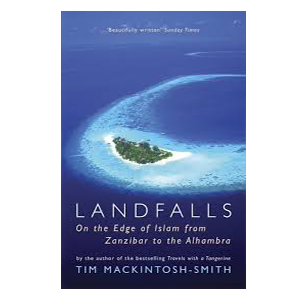 Landfalls: On the Edge of Islam from Zanzibar to the Alhambra
 Tall Tree, Nest of the Wind (The Javanese Shadow-play Dewa Ruai Performed by Ki Anom Soeroto) : A Study in Performance Philology
 Absolution
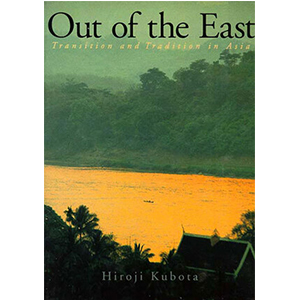 Out of the East: Transition and Tradition in Asia
 A Pale View of Hills


The Films of Akira Kurosawa
In an epilogue provided for his incomparable study of Akira Kurosawa (1910-1998), Donald Richie reflects on Kurosawa’s life work of thirty feature films and describes his last, unfinished project, a film set in the Edo period to be called The Ocean Was Watching.
Kurosawa remains unchallenged as one of the century’s greatest film directors. Through his long and distinguished career he managed, like very few others in the teeth of a huge and relentless industry, to elevate each of his films to a distinctive level of art. His Rashomon—one of the best-remembered and most talked-of films in any language—was a revelation when it appeared in 1950 and did much to bring Japanese cinema to the world’s attention. Kurosawa’s films display an extraordinary breadth and an astonishing strength, from the philosophic and sexual complexity of Rashomon to the moral dedication of Ikiru, from the naked violence of Seven Samurai to the savage comedy of Yojimbo, from the terror-filled feudalism of Throne of Blood to the piercing wit of Sanjuro.
RM182.00
Out of stock
Description
In an epilogue provided for his incomparable study of Akira Kurosawa (1910-1998), Donald Richie reflects on Kurosawa’s life work of thirty feature films and describes his last, unfinished project, a film set in the Edo period to be called The Ocean Was Watching.
Kurosawa remains unchallenged as one of the century’s greatest film directors. Through his long and distinguished career he managed, like very few others in the teeth of a huge and relentless industry, to elevate each of his films to a distinctive level of art. His Rashomon—one of the best-remembered and most talked-of films in any language—was a revelation when it appeared in 1950 and did much to bring Japanese cinema to the world’s attention. Kurosawa’s films display an extraordinary breadth and an astonishing strength, from the philosophic and sexual complexity of Rashomon to the moral dedication of Ikiru, from the naked violence of Seven Samurai to the savage comedy of Yojimbo, from the terror-filled feudalism of Throne of Blood to the piercing wit of Sanjuro.
Publisher: University of California Press
Paperback
1999
ISBN: 9780520220379
Related products
-

Chinese Art
At a time when interest in China has never been greater, this revised edition of Mary Tregear's authoritative survey of the Chinese visual arts will...RM54.50 -

Bamboo In China: Arts, Crafts And A Cultural History
Bamboo has been used for thousands of years in China With its many tributes and strengths, bamboo was blended into China's Confucian, Buddhist and...RM53.00 -

Make Good Art
From the bestselling author of the acclaimed novel AMERICAN GODS and the prize-winning THE OCEAN AT THE END OF THE LANE In May 2012, Neil Gaiman...RM36.90 -

Exiles
This powerful document of the spiritual and physical state of exile now contains 10 new images by master of photography Josef Koudelka The sense of...RM255.00