
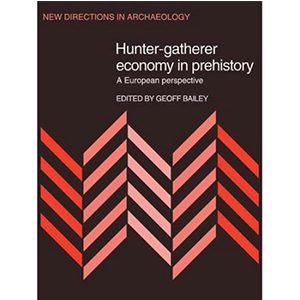
 Hunter-Gatherer Economy in Prehistory: A European Perspective
 The Flea Palace
 Malaysia Human Rights Report 2012: Civil And Political Rights
 A Strangeness in My Mind
 Those Who Leave and Those Who Stay
 Zona: A Book About a Film About a Journey to a Room
 Adventures in Starry Kitchen: 88 Asian-Inspired Recipes from America's Most Famous Underground Restaurant
 The Bones of Grace
 In the Best of Company: Postcards from the Hajj
 The Elections Bullshit
 Watch Us Dance
 House of Glass
 The Year of the Runaways
 Sun Yat Sen In Penang
 The Chulia in Penang: Patronage and Place-Making around the Kapitan Kling Mosque, 1786–1957
 Penang: The Fourth Presidency of India 1805–1830, Vol. 1: Ships, Men and Mansions
 Pembentukan Jiwa
 Malaysian Cinema in the New Millennium: Transcendence beyond Multiculturalism


Asia First: China and the Making of Modern American Conservatism
After Japanese bombs hit Pearl Harbour, the American right stood at a cross-roads. Generally isolationist, conservatives needed to forge their own foreign policy agenda if they wanted to remain politically viable. When Mao Zedong established the People’s Republic of China in 1949 – with the Cold War just underway – they now had a new object of foreign policy, and as Joyce Mao reveals in this fascinating new look at twentieth-century Pacific affairs, that change would provide vital ingredients for American conservatism as we know it today. Mao explores the deep resonance American conservatives felt with the defeat of Chiang Kai-Shek and his exile to Taiwan, which they lamented as the loss of China to communism and the corrosion of traditional values. In response, they fomented aggressive anti-communist positions that urged greater action in the Pacific, a policy known as “Asia First.” While this policy would do nothing to oust the communists from China, it was powerfully effective at home. Asia First provided American conservatives a set of ideals-American sovereignty, selective military intervention, strident anti-communism, and the promotion of a technological defence state-that would bring them into the global era with the positions that are now their hallmark.
RM85.00
Out of stock
Description
After Japanese bombs hit Pearl Harbour, the American right stood at a cross-roads. Generally isolationist, conservatives needed to forge their own foreign policy agenda if they wanted to remain politically viable. When Mao Zedong established the People’s Republic of China in 1949 – with the Cold War just underway – they now had a new object of foreign policy, and as Joyce Mao reveals in this fascinating new look at twentieth-century Pacific affairs, that change would provide vital ingredients for American conservatism as we know it today. Mao explores the deep resonance American conservatives felt with the defeat of Chiang Kai-Shek and his exile to Taiwan, which they lamented as the loss of China to communism and the corrosion of traditional values. In response, they fomented aggressive anti-communist positions that urged greater action in the Pacific, a policy known as “Asia First.” While this policy would do nothing to oust the communists from China, it was powerfully effective at home. Asia First provided American conservatives a set of ideals-American sovereignty, selective military intervention, strident anti-communism, and the promotion of a technological defence state-that would bring them into the global era with the positions that are now their hallmark.
Publisher: University of Chicago Press
Paperback
2015
ISBN: 9780226252711
Related products
-

China’s War with Japan, 1937-1945: The Struggle for Survival
In Rana Mitter's tense, moving and hugely important book, the war between China and Japan - one of the most important struggles of the Second World...RM93.00 -

The Opium War: Drugs, Dreams and the Making of China
In October 1839, Britain entered the first Opium War with China Its brutality notwithstanding, the conflict was also threaded with tragicomedy: with...RM50.00 -

Tea Horse Road: China’s Ancient Trade Road to Tibet
One of the longest and most dramatic trade routes of the ancient world, the Tea Horse Road carried a crucial exchange for 13 centuries between China...RM129.90 -

The Old Man of the Moon
'Our passion was so great Will the Old Man understand and help us once again' The Old Man of the Moon is Shen Fu's intimate and moving account of...RM6.00