
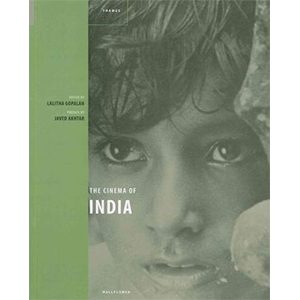
 The Cinema of India


Bollywood’s India : A Public Fantasy
Bollywood is India’s most popular entertainment and one of its most powerful social forces. Its blockbusters contest ideas about state formation, capture the nation’s dispersed anxieties, and fabricate public fantasies of what constitutes “India.” Written by an award-winning scholar of popular culture and postcolonial modernity, Bollywood’s India analyzes the role of the cinema’s most popular blockbusters in making, unmaking, and remaking modern India. With dazzling interpretive virtuosity, Priya Joshi provides an interdisciplinary account of popular cinema as a space that filters politics and modernity for its viewers. Themes such as crime and punishment, family and individuality, vigilante and community capture the diffuse aspirations of an evolving nation. Summoning India’s tumultuous 1970s as an interpretive lens, Joshi reveals the cinema’s social work across decades that saw the decline of studios, the rise of the multi-starrer genre, and the arrival of corporate capital and new media platforms. In elegantly crafted studies of iconic and less familiar films, including Awara (1951), Ab Dilli Dur Nahin (1957), Deewaar (1975), Sholay (1975), Dil Se (1998), A Wednesday (2008), and 3 Idiots (2009), Joshi powerfully conveys the pleasures and politics of Bollywood blockbusters.
RM138.00
1 in stock
Description
Bollywood is India’s most popular entertainment and one of its most powerful social forces. Its blockbusters contest ideas about state formation, capture the nation’s dispersed anxieties, and fabricate public fantasies of what constitutes “India.” Written by an award-winning scholar of popular culture and postcolonial modernity, Bollywood’s India analyzes the role of the cinema’s most popular blockbusters in making, unmaking, and remaking modern India. With dazzling interpretive virtuosity, Priya Joshi provides an interdisciplinary account of popular cinema as a space that filters politics and modernity for its viewers. Themes such as crime and punishment, family and individuality, vigilante and community capture the diffuse aspirations of an evolving nation. Summoning India’s tumultuous 1970s as an interpretive lens, Joshi reveals the cinema’s social work across decades that saw the decline of studios, the rise of the multi-starrer genre, and the arrival of corporate capital and new media platforms. In elegantly crafted studies of iconic and less familiar films, including Awara (1951), Ab Dilli Dur Nahin (1957), Deewaar (1975), Sholay (1975), Dil Se (1998), A Wednesday (2008), and 3 Idiots (2009), Joshi powerfully conveys the pleasures and politics of Bollywood blockbusters.
Publisher: Columbia University Press
Paperback
2015
ISBN: 9780231169615
Related products
-

Ozu: His Life and Films
Yasujiro Ozu, the man whom his kinsmen consider the most Japanese for all film directors, had but one major subject, the Japanese family, and but one...RM154.00 -

Zona: A Book About a Film About a Journey to a Room
In this spellbinding book, the man described by the Daily Telegraph as 'possibly the best living writer in Britain' takes on his biggest challenge...RM75.00 -

A Century of Thai Cinema
Thais began shooting films in 1900; cinema soon became a very popular form of entertainment, which had its golden age in the 1930s This book provides...RM120.00 -

The Black Book
The Black Book is Orhan Pamuk's tour de force, a stunning tapestry of Middle Eastern and Islamic culture which confirmed his reputation as a writer...RM58.00