

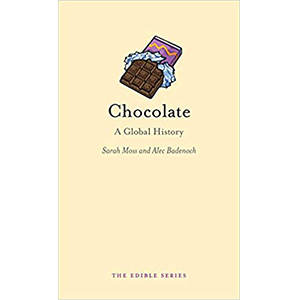
Chocolate: A Global History
Redolent of everything sensual and hedonistic, chocolate is synonymous with our idea of indulgence. It is adored around the world and has been since the Spanish first encountered cocoa beans in South America in the sixteenth century. It is seen as magical, exotic, addictive and powerful beyond anything that can be explained by its ingredients, and in Chocolate Sarah Moss and Alexander Badenoch explore the origins and growth of this almost universal obsession.
Moss and Badenoch recount the history of chocolate, which from ancient times has been associated with sexuality, sin, blood and sacrifice. The first Spanish accounts claim that the Aztecs and Mayans used chocolate as a substitute for blood in sacrificial rituals and as a currency to replace gold. In 1753 Linnaeus gave the cocoa tree the official classification Theobroma cacao, or ‘the food of the gods’. In the eighteenth century chocolate became regarded as an aphrodisiac – the first step on the road to today’s boxes of Valentine delights. Chocolate also looks at the production of chocolate, from artisanal chocolatiers to the brands such as Hershey’s, Lindt and Cadbury that dominate our supermarket shelves, and explores its associations with slavery and globalization.
Packed with tempting images and decadent descriptions of chocolate throughout the ages, Chocolate will be as irresistible as the tasty treats it describes.
RM75.00
Out of stock
Description
Redolent of everything sensual and hedonistic, chocolate is synonymous with our idea of indulgence. It is adored around the world and has been since the Spanish first encountered cocoa beans in South America in the sixteenth century. It is seen as magical, exotic, addictive and powerful beyond anything that can be explained by its ingredients, and in Chocolate Sarah Moss and Alexander Badenoch explore the origins and growth of this almost universal obsession.
Moss and Badenoch recount the history of chocolate, which from ancient times has been associated with sexuality, sin, blood and sacrifice. The first Spanish accounts claim that the Aztecs and Mayans used chocolate as a substitute for blood in sacrificial rituals and as a currency to replace gold. In 1753 Linnaeus gave the cocoa tree the official classification Theobroma cacao, or ‘the food of the gods’. In the eighteenth century chocolate became regarded as an aphrodisiac – the first step on the road to today’s boxes of Valentine delights. Chocolate also looks at the production of chocolate, from artisanal chocolatiers to the brands such as Hershey’s, Lindt and Cadbury that dominate our supermarket shelves, and explores its associations with slavery and globalization.
Packed with tempting images and decadent descriptions of chocolate throughout the ages, Chocolate will be as irresistible as the tasty treats it describes.
Publisher: Reaktion Books
Hardback
2009
ISBN: 9781861895240
Related products
-

The Book of Spice: From Anise to Zedoary
A compendium of spices: the history and uses of the world's favourite flavours Now available in paperback Spices are rare things, at once familiar...RM59.00 -

Rice: A Global History
From jambalaya to risotto, curry to nasi kandar, few foods are as ubiquitous in our meals as rice A dietary staple and indispensable agricultural...RM80.00 -

Onions and Garlic: A Global History
Do you know your onions From large, sweet onions to shallots, garlic, chives and leeks, the allium family contains some of the most popular...RM75.00 -

Rice and Baguette: A History of Food in Vietnam
The once-obscure cuisine of Vietnam is a favourite of many people from East to West After millennia of adaptation and innovation with a pervasive...RM126.00