
 House of Glass
 Child of All Nations
 Footsteps


Palace, Political Party And Power: A Story Of The Socio-Political Development Of Malay Kingship
‘Palace, Political Party and Power: A Story of the Socio-Political Development of Malay Kingship’ traces the history of Malay Rulers in the Malay Peninsula from the late colonial period to the first decade of the 21st century, considering the implications of their decline under colonial rule and the role of the Japanese Occupation in defining Malay identity. After independence in 1957, the Malay Rulers were compelled to embrace Westminster-style constitutional monarchy, under which their role is largely symbolic and affairs of the nation are run by Parliament and the executive branch. A key element of the postwar period was the relation between the Malays and their Rulers, and the way UMNO – the United Malays National Organisation – positioned itself as the “official” voice of the Malays and the Rulers.
This postwar settlement underwent a significant change after the shocking outcome of the March 2008 General Election, which weakened UMNO’s hold on power. The Malay Rulers responded by ‘reinventing’ themselves as active players in the affairs of the nation and recovered some of their traditional rights. Socio-political developments since the departure of Prime Minister Mahathir Mohamad have worked in favor of a royal resurgence, and the Rulers have become an increasingly vocal element in national politics.
RM89.50
Out of stock
Description
‘Palace, Political Party and Power: A Story of the Socio-Political Development of Malay Kingship’ traces the history of Malay Rulers in the Malay Peninsula from the late colonial period to the first decade of the 21st century, considering the implications of their decline under colonial rule and the role of the Japanese Occupation in defining Malay identity. After independence in 1957, the Malay Rulers were compelled to embrace Westminster-style constitutional monarchy, under which their role is largely symbolic and affairs of the nation are run by Parliament and the executive branch. A key element of the postwar period was the relation between the Malays and their Rulers, and the way UMNO – the United Malays National Organisation – positioned itself as the “official” voice of the Malays and the Rulers.
This postwar settlement underwent a significant change after the shocking outcome of the March 2008 General Election, which weakened UMNO’s hold on power. The Malay Rulers responded by ‘reinventing’ themselves as active players in the affairs of the nation and recovered some of their traditional rights. Socio-political developments since the departure of Prime Minister Mahathir Mohamad have worked in favor of a royal resurgence, and the Rulers have become an increasingly vocal element in national politics.
Publisher: NUS Press
Paperback
2011
ISBN: 9789971695071
Related products
-

The Multicultural Performing Arts, Crafts, Festivals and Food of Penang
The meeting place of different peoples, Penang attracted settlers from the Malay archipelago, Thailand, Burma, Hadhraumaut, India, China and Europe...RM100.00 -

The Elections Bullshit
No bullshit writer Kee Thuan Chye tells the story of Malaysia’s 13th general election (GE13) before, during and after polling day (May 5, 2013)...RM35.00 -
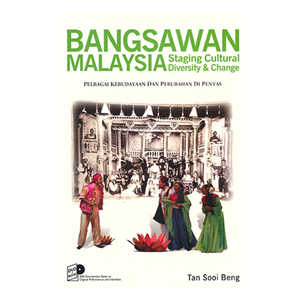
Bangsawan Malaysia: Staging Cultural Diversity and Change
Bangsawan was the first popular urban commercial theatre in Malaysia which catered to multiethnic audiences Emerging in the late nineteenth century,...RM50.00 -

Can We Save Malaysia, Please!
After the 13th general election (GE13) in May 2013, Malaysians hoped that the ruling Barisan Nasional (BN) coalition would respond humbly and...RM44.90