
 Penang: The Fourth Presidency of India 1805–1830, Vol. 1: Ships, Men and Mansions


Old Penang
For centuries Penang was part of the Muslim state of Kedah, but after the intervention in 1786 of a `forgotten’ English trader, Captain Francis Light, it became a British mercantile and shipping outpost, administered as part of British India and renamed Prince of Wales Island. From this first toehold in the Strait of Malacca, British power and influence eventually spread to the entire Malayan Peninsula, as well as to Singapore and parts of Borneo. Old Penang tells how Francis Light, using economic inventiveness, attracted peoples from all over the region so that the first settlement in the Strait quickly became a place where `so many people are assembled together and so great a variety of langauges are spoken in so small a space’.
This cosmopolitan flavour, combined with natural scenic beauty, made Penang a favourite port of call fpr travellers on the long voyage from Europe to the Fare East. Using broad brush strokes as well as punctilious details, the author has painted a historical portrait of old Penang: its communities, its growing pains, its principal personalities, and its chief attractions. Beginning with James Wathen in 1811, there is also a gallery of travelling artists whose works have been included among the paintings and drawings that illustrate the text.
RM250.00
Out of stock
Description
For centuries Penang was part of the Muslim state of Kedah, but after the intervention in 1786 of a `forgotten’ English trader, Captain Francis Light, it became a British mercantile and shipping outpost, administered as part of British India and renamed Prince of Wales Island. From this first toehold in the Strait of Malacca, British power and influence eventually spread to the entire Malayan Peninsula, as well as to Singapore and parts of Borneo. Old Penang tells how Francis Light, using economic inventiveness, attracted peoples from all over the region so that the first settlement in the Strait quickly became a place where `so many people are assembled together and so great a variety of langauges are spoken in so small a space’.
This cosmopolitan flavour, combined with natural scenic beauty, made Penang a favourite port of call fpr travellers on the long voyage from Europe to the Fare East. Using broad brush strokes as well as punctilious details, the author has painted a historical portrait of old Penang: its communities, its growing pains, its principal personalities, and its chief attractions. Beginning with James Wathen in 1811, there is also a gallery of travelling artists whose works have been included among the paintings and drawings that illustrate the text.
Publisher: OUP Southeast Asia
Hardback
1996
ISBN: 9789835600173
Related products
-

Sun Yat Sen In Penang
The Second Guangzhou Uprising (also called the Canton March 29 Uprising), a turning point of the 1911 Chinese Revolution, was planned from a place...RM30.00 -

1819
January 19, 1819 A British vessel, the Indiana, set sail from Penang down the coast of the Malay Peninsula, skippered by Captain James Pearl, with a...RM33.00 -
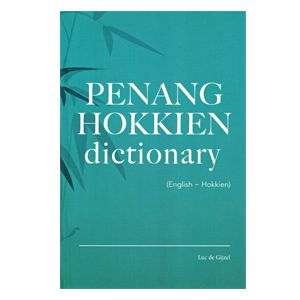
Penang Hokkien Dictionary (English~Hokkien)
Penang Hokkien is a unique dialect that is widely spoken in and around Penang More than two centuries ago, settlers from Southern China’s Fujian...RM25.00 -
Karpal Singh: Tiger of Jelutong, The Full Biography 1940-2014
Karpal Singh is widely regarded as Malaysia’s best criminal and constitutional lawyer His sudden death on 17 April 2014 in a horrific car accident...Original price was: RM54.90.RM50.00Current price is: RM50.00.
