
 The Love Department
 Tall Tree, Nest of the Wind (The Javanese Shadow-play Dewa Ruai Performed by Ki Anom Soeroto) : A Study in Performance Philology
 Nicotine
 Mislaid
 Avalon
 The Farming of Bones
 This Earth of Mankind
 The Art of Cloth in Mughal India
 Let Us Descend
 The Work of Art in the Age of Mechanical Reproduction
 Bringing History to Life through Film: The Art of Cinematic Storytelling
 Building Non-Buildings: 21 Images by Studio Karya
 Body Art
 Penang: The Fourth Presidency of India 1805–1830, Vol. 1: Ships, Men and Mansions
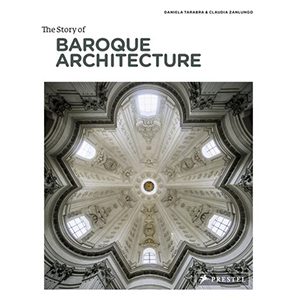 The Story of Baroque Architecture
 Footsteps
 Banana Punk Rawk Trails: A Euro-Fool’s Metal Punk Journeys in Malaysia, Borneo and Indonesia
 Dancing The Malaysian
 Child of All Nations
 House of Glass
 Sun Yat Sen In Penang
 The Chulia in Penang: Patronage and Place-Making around the Kapitan Kling Mosque, 1786–1957
 Lee Joo For Retrospective


Penang And Its Region: The Story Of An Asian Entreport
From its beginnings in the late eighteenth century, the vibrant colonial port of Penang attracted a diverse range of peoples, enabled pioneering commercial enterprises, and fomented inter-ethnic collaboration and inter-cultural borrowings. The island came to be known as the “Pearl of the Orient”, and for many travellers it was their first port of call in Southeast Asia. In the early nineteenth century, Singapore displaced Penang in international trade, but the island remained a major focus of regional trade. For this reason, the story of Penang’s relations with the Malay Peninsula and other parts of Southeast Asia reveal a great deal about conditions within the region.
This collection discusses the personal networks that have linked prominent individuals in Penang with neighbouring areas, and then considers the position of the island as a whole within the Southeast Asian region. Specifically, the authors write about local entrepreneurs, mutual help associations, and cross border trading and political networks, and aspects of how the cosmopolitan population of the island negotiated the transition from British colony to Malaysian state.
RM45.00
Out of stock
Description
From its beginnings in the late eighteenth century, the vibrant colonial port of Penang attracted a diverse range of peoples, enabled pioneering commercial enterprises, and fomented inter-ethnic collaboration and inter-cultural borrowings. The island came to be known as the “Pearl of the Orient”, and for many travellers it was their first port of call in Southeast Asia. In the early nineteenth century, Singapore displaced Penang in international trade, but the island remained a major focus of regional trade. For this reason, the story of Penang’s relations with the Malay Peninsula and other parts of Southeast Asia reveal a great deal about conditions within the region.
This collection discusses the personal networks that have linked prominent individuals in Penang with neighbouring areas, and then considers the position of the island as a whole within the Southeast Asian region. Specifically, the authors write about local entrepreneurs, mutual help associations, and cross border trading and political networks, and aspects of how the cosmopolitan population of the island negotiated the transition from British colony to Malaysian state.
Publisher: NUS Press
Paperback
2009
ISBN: 9789971694234
Related products
-

The Multicultural Performing Arts, Crafts, Festivals and Food of Penang
The meeting place of different peoples, Penang attracted settlers from the Malay archipelago, Thailand, Burma, Hadhraumaut, India, China and Europe...RM100.00 -

PIPE’ 10: Penang International Print Exhibition 2010
PIPE’ 10 is a compilation book of print arts featured in the Penang International Print Exhibition 2010 (PIPE 2010) The exhibition covered a...RM50.00 -

A Nyonya Inheritance
Pearly Kee is a fifth generation Penang Nyonya and well-known food ambassador for Penang Her popular Nyonya cooking classes have attracted students...RM80.00 -

Artist’s Favourite II
Artist favourite 2 is the continuation of the publication of a Artist favourite 1, which was published in year 2006 Artist favourite is...RM50.00