
 The Love Department
 The Undesirables: Inside Nauru
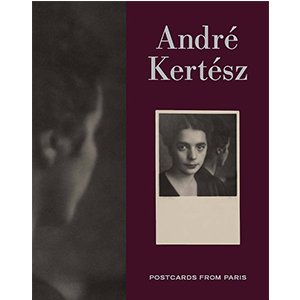 Andre Kertesz: Postcards from Paris
 Dancing The Malaysian
 Anak Malaysia: Pengembaraan Seorang Jurugambar
 Lee Joo For Retrospective
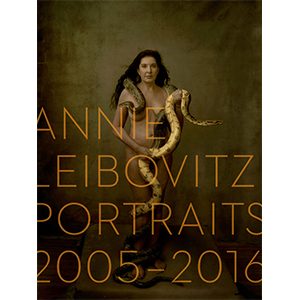 Annie Leibovitz: Portraits 2005 - 2016
 Another Way of Telling: A Possible Theory of Photography
 Zona: A Book About a Film About a Journey to a Room
 An Uncommon Hero: M.K. Rajakumar In Politics & Medicine
 The Translator Gives It Visible Form: Translating Malay and Indonesian Literature
 The Chulia in Penang: Patronage and Place-Making around the Kapitan Kling Mosque, 1786–1957
 Penang: The Fourth Presidency of India 1805–1830, Vol. 2: Fire, Spice and Edifice
 Black Milk: On Motherhood and Writing
 Portraits of Penang: Little India
 Vanishing Beauty: Asian Jewelry and Ritual Objects from the Barbara and David Kipper Collection
 XS Green: Big Ideas, Small Buildings
 Watch Us Dance
 Child of All Nations
 Children of the Stone: The Power of Music in a Hard Land
 This Earth of Mankind


Penang: Rites Of Belonging In A Malaysian Chinese Community
In what is today Malaysia, the British established Georgetown on Penang Island in 1786, and encouraged Chinese merchants and labourers to migrate to this vibrant trading port. In the multicultural urban settlement that developed, the Chinese immigrants organized their social life through community temples like the Guanyin Temple (Kong Hok Palace) and their secret sworn brotherhoods. These community associations assumed exceptional importance precisely because they were a means to establish a social presence for the Chinese immigrants, to organize their social life, and to display their economic prowess. The Confucian “cult of memory” also took on new meanings in the early twentieth century as a form of racial pride. In twentieth-century Penang, religious practices and events continued to draw the boundaries of belonging in the idiom of the sacred.
Part I of Rites of Belonging focuses on the conjuncture between Chinese and British in colonial Penang. The author closely analyzes the 1857 Guanyin Temple Riots and conflicts leading to the suppression of the Chinese sworn brotherhoods. Part II investigates the conjuncture between Chinese and Malays in contemporary Malaysia, and the revitalization in the 1970s and 1980s of Chinese popular religious culture.
RM49.00
Out of stock
Description
In what is today Malaysia, the British established Georgetown on Penang Island in 1786, and encouraged Chinese merchants and labourers to migrate to this vibrant trading port. In the multicultural urban settlement that developed, the Chinese immigrants organized their social life through community temples like the Guanyin Temple (Kong Hok Palace) and their secret sworn brotherhoods. These community associations assumed exceptional importance precisely because they were a means to establish a social presence for the Chinese immigrants, to organize their social life, and to display their economic prowess. The Confucian “cult of memory” also took on new meanings in the early twentieth century as a form of racial pride. In twentieth-century Penang, religious practices and events continued to draw the boundaries of belonging in the idiom of the sacred.
Part I of Rites of Belonging focuses on the conjuncture between Chinese and British in colonial Penang. The author closely analyzes the 1857 Guanyin Temple Riots and conflicts leading to the suppression of the Chinese sworn brotherhoods. Part II investigates the conjuncture between Chinese and Malays in contemporary Malaysia, and the revitalization in the 1970s and 1980s of Chinese popular religious culture.
Publisher: NUS Press
Paperback
2009
ISBN: 9789971694166
Related products
-

Malaysian Cooking: A Master Cook Reveals Her Best Recipes
Cook spicy and fragrant dishes with this innovative and easy-to-follow Malaysian Cookbook Carol Selva Rajah, a well respected authority and...RM47.00 -

The Sara Saga
The decades from the 1930s to the 1960s were hugely important in the making of modern Asia They saw the tumultuous transition from colonial rule...RM40.00 -

The Multicultural Performing Arts, Crafts, Festivals and Food of Penang
The meeting place of different peoples, Penang attracted settlers from the Malay archipelago, Thailand, Burma, Hadhraumaut, India, China and Europe...RM100.00 -

Artist’s Favourite II
Artist favourite 2 is the continuation of the publication of a Artist favourite 1, which was published in year 2006 Artist favourite is...RM50.00