
 Chinese Art and Dynastic Time
 Selected Poems
 The Cinema of India
 Cinema at the Crossroads: Nation and the Subject in East Asian Cinema
 Chinese Painting and Its Audiences
 No Other Way Out: A Biography Of Ong Seok Kim
 Lee Joo For Retrospective
 Yang Bilang
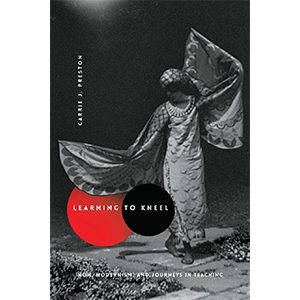 Learning to Kneel: Noh, Modernism, and Journeys in Teaching
 Cinema, Emergence and the Films of Satyajit Ray
 Nobody Called Me Charlie: The Story Of A Radical White Journalist Writing For A Black Newspaper In The Civil Rights Era
 The Chulia in Penang: Patronage and Place-Making around the Kapitan Kling Mosque, 1786–1957
 Penelope Fitzgerald: A Life
 René Magritte
 Nothing to Be Frightened Of
 This Earth of Mankind
 Footsteps
 Child of All Nations
 Ask For No Bullshit, Get Some More!
 Dancing The Malaysian
 Sun Yat Sen In Penang
 House of Glass
 Collected Plays, Volume 1


Learning to Kneel: Noh, Modernism, and Journeys in Teaching
In this inventive mix of criticism, scholarship, and personal reflection, Carrie J. Preston explores the nature of cross-cultural teaching, learning, and performance. Throughout the twentieth century, Japanese noh was a major creative catalyst for American and European writers, dancers, and composers. The noh theater’s stylized choreography, poetic chant, spectacular costumes and masks, and engagement with history inspired Western artists as they reimagined new approaches to tradition and form. In Learning to Kneel, Preston locates noh’s important influence on such canonical figures as Pound, Yeats, Brecht, Britten, and Beckett. These writers learned about noh from an international cast of collaborators, and Preston traces the ways in which Japanese and Western artists influenced one another. Preston’s critical work was profoundly shaped by her own training in noh performance technique under a professional actor in Tokyo, who taught her to kneel, bow, chant, and submit to the teachings of a conservative tradition. This encounter challenged Preston’s assumptions about effective teaching, particularly her inclinations to emphasize Western ideas of innovation and subversion and to overlook the complex ranges of agency experienced by teachers and students. It also inspired new perspectives regarding the generative relationship between Western writers and Japanese performers. Pound, Yeats, Brecht, and others are often criticized for their orientalist tendencies and misappropriation of noh, but Preston’s analysis and her journey reflect a more nuanced understanding of cultural exchange.
RM116.00
1 in stock
Description
In this inventive mix of criticism, scholarship, and personal reflection, Carrie J. Preston explores the nature of cross-cultural teaching, learning, and performance. Throughout the twentieth century, Japanese noh was a major creative catalyst for American and European writers, dancers, and composers. The noh theater’s stylized choreography, poetic chant, spectacular costumes and masks, and engagement with history inspired Western artists as they reimagined new approaches to tradition and form. In Learning to Kneel, Preston locates noh’s important influence on such canonical figures as Pound, Yeats, Brecht, Britten, and Beckett. These writers learned about noh from an international cast of collaborators, and Preston traces the ways in which Japanese and Western artists influenced one another. Preston’s critical work was profoundly shaped by her own training in noh performance technique under a professional actor in Tokyo, who taught her to kneel, bow, chant, and submit to the teachings of a conservative tradition. This encounter challenged Preston’s assumptions about effective teaching, particularly her inclinations to emphasize Western ideas of innovation and subversion and to overlook the complex ranges of agency experienced by teachers and students. It also inspired new perspectives regarding the generative relationship between Western writers and Japanese performers. Pound, Yeats, Brecht, and others are often criticized for their orientalist tendencies and misappropriation of noh, but Preston’s analysis and her journey reflect a more nuanced understanding of cultural exchange.
Publisher: Columbia University Press
Paperback
2016
ISBN: 9780231166515
Related products
-

Global & Local Dance in Performance
These 30 papers are from the 2005 Asia Pacific International Dance Conference in Kuala Lumpur which was held as part of the centenary celebrations of...RM82.00 -

Thai Puppets and Khon Masks
Elaborately, gilded masks worn by dancers performing in the popular Ramayana dance drama are an enduring symbol of Thai culture Since their...RM150.00 -

D’Albuquerque’s Children: Performing Tradition in Malaysia’s Portuguese Settlement
When the Portuguese seafarer Afonso de Albuquerque conquered the bustling port of Malacca in 1511, he effectively gained control of the entire South...RM158.50 -

Asian Cinema: A Field Guide
The First Complete Guide to Asian Film Asian cinema has never been more popular than it is today In recent years, films such asSpirited...RM85.00