
 Pandemic Preparedness: Creating a Fair And Equitable Influenza Virus And Benefit Sharing System
 Dancing on Thin Ice
 Under The Wide And Starry Sky
 Inspector Singh Investigates: A Calamitous Chinese Killing
 HOPE
HOPE
 Diamonds In My Pocket: Tales Of A Childhood In Asia
 Fear of Mirrors
 House of Glass
 Sea Of Poppies
 Sun Yat Sen In Penang
 Bridging Human Rights Principles And Business Realities In Northeast Asia
 Girl
Girl
 The Calcutta Chromosome
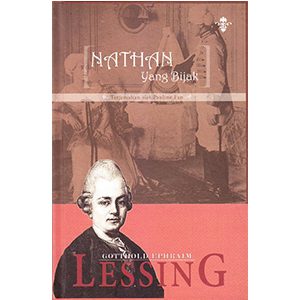 Nathan Yang Bijak
 Dancing The Malaysian
 Hope Not Hype: The Future Of Agriculture Guided By The International Assessment Of Agriculture Knowledge, Science And Technology For Development
 Last Friends
 Coming Of Age: A Decade Of Essays, 2001-2011
 The Farming of Bones


Between Monopoly and Free Trade: The English East India Company, 1600–1757
The English East India Company was one of the most powerful and enduring organizations in history. Between Monopoly and Free Trade locates the source of that success in the innovative policy by which the Company’s Court of Directors granted employees the right to pursue their own commercial interests while in the firm’s employ. Exploring trade network dynamics, decision-making processes, and ports and organisational context, Emily Erikson demonstrates why the English East India Company was a dominant force in the expansion of trade between Europe and Asia, and she sheds light on the related problems of why England experienced rapid economic development and how the relationship between Europe and Asia shifted in the eighteenth and nineteenth centuries.
Though the Company held a monopoly on English overseas trade to Asia, the Court of Directors extended the right to trade in Asia to their employees, creating an unusual situation in which employees worked both for themselves and for the Company as overseas merchants. Building on the organisational infrastructure of the Company and the sophisticated commercial institutions of the markets of the East, employees constructed a cohesive internal network of peer communications that directed English trading ships during their voyages. This network integrated Company operations, encouraged innovation, and increased the Company’s flexibility, adaptability and responsiveness to local circumstance.
Between Monopoly and Free Trade highlights the dynamic potential of social networks in the early modern era.
RM125.00
Out of stock
Description
The English East India Company was one of the most powerful and enduring organizations in history. Between Monopoly and Free Trade locates the source of that success in the innovative policy by which the Company’s Court of Directors granted employees the right to pursue their own commercial interests while in the firm’s employ. Exploring trade network dynamics, decision-making processes, and ports and organisational context, Emily Erikson demonstrates why the English East India Company was a dominant force in the expansion of trade between Europe and Asia, and she sheds light on the related problems of why England experienced rapid economic development and how the relationship between Europe and Asia shifted in the eighteenth and nineteenth centuries.
Though the Company held a monopoly on English overseas trade to Asia, the Court of Directors extended the right to trade in Asia to their employees, creating an unusual situation in which employees worked both for themselves and for the Company as overseas merchants. Building on the organisational infrastructure of the Company and the sophisticated commercial institutions of the markets of the East, employees constructed a cohesive internal network of peer communications that directed English trading ships during their voyages. This network integrated Company operations, encouraged innovation, and increased the Company’s flexibility, adaptability and responsiveness to local circumstance.
Between Monopoly and Free Trade highlights the dynamic potential of social networks in the early modern era.
Reviews:
“It offers a fresh perspective on a key aspect of the Company’s development and provides some impressive data to support the idea that private trade was the crucial dynamo driving Company innovation and expansion.” – John McAleer, Journal of Maritime History
“Between Monopoly and Free Trade is a spectacular debut that will mark Erikson as a luminary of historical sociology and earn her many intellectual followers. . . . Though the sociologist familiar with, but not in thrall to, analytical sociology will be prone to approach the text with skepticism (as I was), he or she will soon be won over by the author’s excellence in scholarship.” – Isaac Ariail Reed, American Journal of Sociology
Publisher: Princeton University Press
Paperback
2016
ISBN: 9780691173795
Related products
-

Henri Cartier-Bresson: Here and Now
A new career retrospective of the legendary photographer Henri Cartier-Bresson including rare and unpublished work Henri Cartier-Bresson’s work...RM300.00 -

The Little Prince
All grown-ups were children once (but most of them have forgotten) A pilot who has crash landed in the desert awakes to see an extraordinary...RM45.90 -

Contemporary Islamic Discourse in the Malay–Indonesian World: Critical Perspectives
While many books have probed the role of Islam in political and social change in Southeast Asia over the past three decades, few have focused on the...RM50.00 -

The Illuminations
How much do we keep from the people we love Why is the truth so often buried in secrets Can we learn from the past or must we forget it Standing...RM50.00