
 Chinese Art and Dynastic Time
 Selected Poems
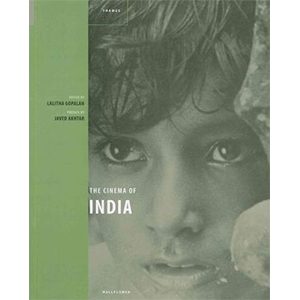 The Cinema of India
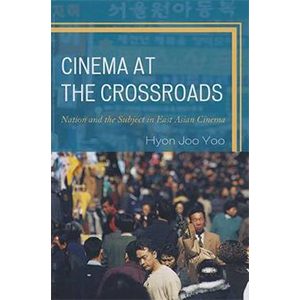 Cinema at the Crossroads: Nation and the Subject in East Asian Cinema
 Chinese Painting and Its Audiences
 No Other Way Out: A Biography Of Ong Seok Kim
 Lee Joo For Retrospective
 Yang Bilang
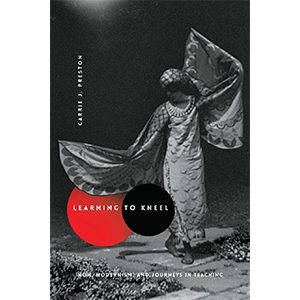 Learning to Kneel: Noh, Modernism, and Journeys in Teaching
 Cinema, Emergence and the Films of Satyajit Ray
 Nobody Called Me Charlie: The Story Of A Radical White Journalist Writing For A Black Newspaper In The Civil Rights Era
 The Chulia in Penang: Patronage and Place-Making around the Kapitan Kling Mosque, 1786–1957
 Penelope Fitzgerald: A Life
 René Magritte
 Nothing to Be Frightened Of
 This Earth of Mankind
 Footsteps
 Child of All Nations
 Ask For No Bullshit, Get Some More!
 Dancing The Malaysian
 Sun Yat Sen In Penang
 House of Glass
 Collected Plays, Volume 1
 Penang: The Fourth Presidency of India 1805–1830, Vol. 1: Ships, Men and Mansions
 Dancing on Thin Ice


Planting Empire, Cultivating Subjects British Malaya, 1786–1941
Planting Empire, Cultivating Subjects examines the stories of ordinary people to explore the internal workings of colonial rule. Chinese, Indians and Malays learned about being British through the plantations, towns, schools and newspapers of a modernising colony. Yet they got mixed messages from the harsh, racial hierarchies of sugar and rubber estates and cosmopolitan urban societies. Empire meant mobility, fluidity, and hybridity, as well as the enactment of racial privilege and rigid ethnic differences. Using sources ranging from administrative files, court transcripts and oral interviews to periodicals and material culture, Lynn Hollen Lees explores the nature and development of colonial governance, and the ways in which Malayan residents experienced British rule in towns and plantations. This is an innovative study demonstrating how empire brought with it both oppression and economic opportunity, shedding new light on the shifting nature of colonial subjecthood and identity, as well as the memory and afterlife of empire.
- Proposes a more complex view of colonialism that takes into account shared sovereignties, multi-ethnic populations, and widely different styles of governance
- Situates the history of British Malaya in its global context, recognising its importance to the Indian Ocean and the Southern Pacific areas, as well as the world economy
- Demonstrates the impact of British rule on ordinary people as they migrated long distances into a frontier area
RM325.00
Out of stock
Description
Planting Empire, Cultivating Subjects examines the stories of ordinary people to explore the internal workings of colonial rule. Chinese, Indians and Malays learned about being British through the plantations, towns, schools and newspapers of a modernising colony. Yet they got mixed messages from the harsh, racial hierarchies of sugar and rubber estates and cosmopolitan urban societies. Empire meant mobility, fluidity, and hybridity, as well as the enactment of racial privilege and rigid ethnic differences. Using sources ranging from administrative files, court transcripts and oral interviews to periodicals and material culture, Lynn Hollen Lees explores the nature and development of colonial governance, and the ways in which Malayan residents experienced British rule in towns and plantations. This is an innovative study demonstrating how empire brought with it both oppression and economic opportunity, shedding new light on the shifting nature of colonial subjecthood and identity, as well as the memory and afterlife of empire.
- Proposes a more complex view of colonialism that takes into account shared sovereignties, multi-ethnic populations, and widely different styles of governance
- Situates the history of British Malaya in its global context, recognising its importance to the Indian Ocean and the Southern Pacific areas, as well as the world economy
- Demonstrates the impact of British rule on ordinary people as they migrated long distances into a frontier area
Publisher: Cambridge University Press
Hardback
2017
ISBN: 9781107038400
Related products
-

The Little Prince
All grown-ups were children once (but most of them have forgotten) A pilot who has crash landed in the desert awakes to see an extraordinary...RM45.90 -

Memories of Dr Wu Lien Teh: Plague Fighter
Originally published in 1995, this special edition has been reprinted on the occasion of the 2nd Dr Wu Lien-Teh Global Commemorative Symposium held...RM80.00 -

Magnum Magnum
The photography book of the decade and a landmark publication celebrating the vision, imagination and brilliance of the world’s most renowned...RM168.00 -

Chinese Among Others: Emigration in Modern Times
In this book, distinguished historian Philip A Kuhn tells the remarkable five-century story of Chinese emigration as an integral part of China's...RM75.00