
 The Chulia in Penang: Patronage and Place-Making around the Kapitan Kling Mosque, 1786–1957
 House of Glass
 The Farming of Bones
 Sun Yat Sen In Penang
 Pembentukan Jiwa
 Changing My Mind: Occasional Essays
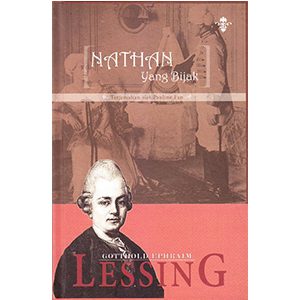 Nathan Yang Bijak
 Bridging Human Rights Principles And Business Realities In Northeast Asia
 Less than One: Selected Essays
 This Earth of Mankind
 Footsteps
 Revisiting Malaysia Modernisation: Essays On Science, Technology, Religion And Environment
 The Calcutta Chromosome
 Migration, Health And Inequality


Falun Gong: The End of Days
The world first took notice of a religious group called Falun Gong on April 25, 1999, when more than 10,000 of its followers protested before the Chinese Communist headquarters in Beijing. Falun Gong investigates events in the wake of the demonstration: Beijing’s condemnation of the group as a Western, anti-Chinese force and doomsday cult, the sect’s continued defiance, and the nationwide campaign that resulted in the incarceration and torture of many Falun Gong faithful. Maria Hsia Chang discusses the Falun Gong’s beliefs, including their ideas on cosmology, humanity’s origin, karma, reincarnation, UFOs, and the coming apocalypse. She balances an account of the Chinese government’s case against the sect with an evaluation of the credibility of those accusations. Describing China’s long history of secret societies that initiated powerful uprisings and sometimes overthrew dynasties, she explains the Chinese government’s brutal treatment of the sect. And she concludes with a chronicle of the ongoing persecution of religious groups in China, of which Falun Gong is only one of many, and the social conditions that breed the popular discontent and alienation that spawn religious millenarianism.
RM80.00
Out of stock
Description
The world first took notice of a religious group called Falun Gong on April 25, 1999, when more than 10,000 of its followers protested before the Chinese Communist headquarters in Beijing. Falun Gong investigates events in the wake of the demonstration: Beijing’s condemnation of the group as a Western, anti-Chinese force and doomsday cult, the sect’s continued defiance, and the nationwide campaign that resulted in the incarceration and torture of many Falun Gong faithful. Maria Hsia Chang discusses the Falun Gong’s beliefs, including their ideas on cosmology, humanity’s origin, karma, reincarnation, UFOs, and the coming apocalypse. She balances an account of the Chinese government’s case against the sect with an evaluation of the credibility of those accusations. Describing China’s long history of secret societies that initiated powerful uprisings and sometimes overthrew dynasties, she explains the Chinese government’s brutal treatment of the sect. And she concludes with a chronicle of the ongoing persecution of religious groups in China, of which Falun Gong is only one of many, and the social conditions that breed the popular discontent and alienation that spawn religious millenarianism.
Publisher: Yale University Press
Hardback
2004
ISBN: 9780300102277
Related products
-

Contemporary Islamic Discourse in the Malay–Indonesian World: Critical Perspectives
While many books have probed the role of Islam in political and social change in Southeast Asia over the past three decades, few have focused on the...RM50.00 -

Ask For No Bullshit, Get Some More!
No-nonsense writer Kee Thuan Chye is back exposing more bullshit in the Malaysian political realm His pen is as sharp as ever as he slices the lies...RM35.00 -

Taking Aim At The Arms Trade: NGOs, Global Civil Society And The World Military Order
Taking Aim at The Arms Trade: NGOs, Global Civil Society and the World Military Order takes a critical look at the ways in which NGOs portray the...RM100.00 -

Postmodern Imperialism: Geopolitics And The Great Games
The game motif is useful as a metaphor for the broader rivalry between nations and economic systems with the rise of imperialism and the pursuit of...RM75.00