
 In the Country of Men
 In the City by the Sea
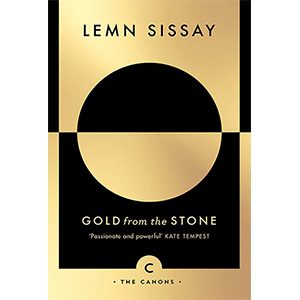 Gold from the Stone: New and Selected Poems
 Girls Are Coming Out of the Woods
 Absolution
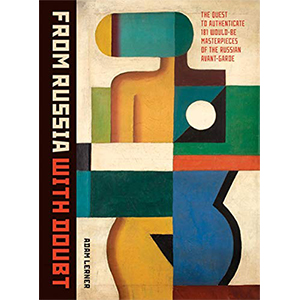 From Russia With Doubt: The Quest to Authenticate 181 Would-Be Masterpieces of the Russian Avant-Garde
 Child of All Nations
 Grape, Olive, Pig: Deep Travels through Spain's Food Culture
 Malaysia Human Rights Report 2012: Civil And Political Rights
 The Stone Woman
 Time for Socialism: Dispatches from a World on Fire, 2016-2021
 Dancing The Malaysian
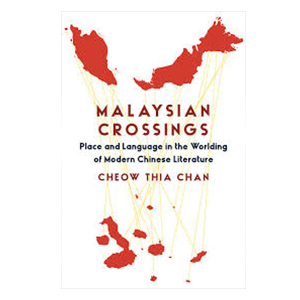 Malaysian Crossings: Place and Language in the Worlding of Modern Chinese Literature
 Tall Tree, Nest of the Wind (The Javanese Shadow-play Dewa Ruai Performed by Ki Anom Soeroto) : A Study in Performance Philology
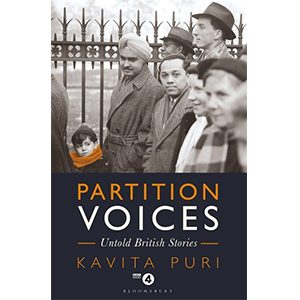 Partition Voices: Untold British Stories
 Sensing Others: Voicing Batek Ethical Lives at the Edge of a Malaysian Rainforest
 The Anthropology of Hunter-Gatherer: Key Themes for Archaeologists
 Shadows At Noon: The South Asian Twentieth Century
 Midnight's Children
 The Heart is a Shifting Sea: Love and Marriage in Mumbai
 This Earth of Mankind
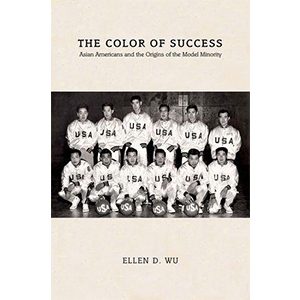 The Color of Success: Asian Americans and the Origins of the Model Minority
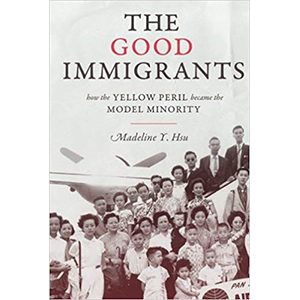 The Good Immigrants: How the Yellow Peril Became the Model Minority

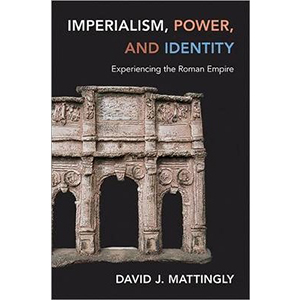
Imperialism, Power and Identity: Experiencing the Roman Empire
Despite what history has taught us about imperialism’s destructive effects on colonial societies, many classicists continue to emphasize disproportionately the civilizing and assimilative nature of the Roman Empire and to hold a generally favorable view of Rome’s impact on its subject peoples. Imperialism, Power, and Identity boldly challenges this view using insights from postcolonial studies of modern empires to offer a more nuanced understanding of Roman imperialism.
Rejecting outdated notions about Romanization, David Mattingly focuses instead on the concept of identity to reveal a Roman society made up of far-flung populations whose experience of empire varied enormously. He examines the nature of power in Rome and the means by which the Roman state exploited the natural, mercantile, and human resources within its frontiers. Mattingly draws on his own archaeological work in Britain, Jordan, and North Africa and covers a broad range of topics, including sexual relations and violence; census-taking and taxation; mining and pollution; land and labor; and art and iconography. He shows how the lives of those under Rome’s dominion were challenged, enhanced, or destroyed by the empire’s power, and in doing so he redefines the meaning and significance of Rome in today’s debates about globalization, power, and empire.
Imperialism, Power, and Identity advances a new agenda for classical studies, one that views Roman rule from the perspective of the ruled and not just the rulers.
In a new preface, Mattingly reflects on some of the reactions prompted by the initial publication of the book.
RM65.00
1 in stock
Description
Despite what history has taught us about imperialism’s destructive effects on colonial societies, many classicists continue to emphasize disproportionately the civilizing and assimilative nature of the Roman Empire and to hold a generally favorable view of Rome’s impact on its subject peoples. Imperialism, Power, and Identity boldly challenges this view using insights from postcolonial studies of modern empires to offer a more nuanced understanding of Roman imperialism.
Rejecting outdated notions about Romanization, David Mattingly focuses instead on the concept of identity to reveal a Roman society made up of far-flung populations whose experience of empire varied enormously. He examines the nature of power in Rome and the means by which the Roman state exploited the natural, mercantile, and human resources within its frontiers. Mattingly draws on his own archaeological work in Britain, Jordan, and North Africa and covers a broad range of topics, including sexual relations and violence; census-taking and taxation; mining and pollution; land and labor; and art and iconography. He shows how the lives of those under Rome’s dominion were challenged, enhanced, or destroyed by the empire’s power, and in doing so he redefines the meaning and significance of Rome in today’s debates about globalization, power, and empire.
Imperialism, Power, and Identity advances a new agenda for classical studies, one that views Roman rule from the perspective of the ruled and not just the rulers.
In a new preface, Mattingly reflects on some of the reactions prompted by the initial publication of the book.
Publisher: Princeton University Press
Paperback
2013
ISBN: 9780691160177
Related products
-

Creating Criminals: Prisons And People In A Market Society
Vivien Stern explains the forces dictating the shape and direction of crime patterns and criminal justice responses globally, arguing that many...RM45.00 -

Postmodern Imperialism: Geopolitics And The Great Games
The game motif is useful as a metaphor for the broader rivalry between nations and economic systems with the rise of imperialism and the pursuit of...RM75.00 -

Migration, Health And Inequality
Should migrants have the same rights as citizens to health care services What do we mean by rights and by health And how do we uphold such rights...RM100.00 -

Derailed! – What Smart Executives Do To Stay On Track
Derailed ! At the heart of many a successful career there often lurks the spectre of failure Derailed ! uncovers the hidden dangers, pinpoints the...RM28.00