
 Pandemic Preparedness: Creating a Fair And Equitable Influenza Virus And Benefit Sharing System
 Dancing on Thin Ice
 Under The Wide And Starry Sky
 HOPE
HOPE
 Diamonds In My Pocket: Tales Of A Childhood In Asia
 Fear of Mirrors
 House of Glass
 Sea Of Poppies
 Sun Yat Sen In Penang
 Bridging Human Rights Principles And Business Realities In Northeast Asia
 Girl
Girl
 The Calcutta Chromosome
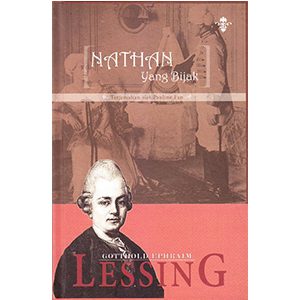 Nathan Yang Bijak
 Dancing The Malaysian
 Hope Not Hype: The Future Of Agriculture Guided By The International Assessment Of Agriculture Knowledge, Science And Technology For Development
 Last Friends


Surabaya, 1945 – 2010: Neighbourhood, State And Economy In Indonesia’s City Of Struggle
This is is a remarkable study of urban society in one of Indonesia’s main port cities. It views Surabaya from the experiences of the people who occupy its alleyways, riverbanks and muddy roadsides, a group that has had little say in the making of policy or the writing of Indonesia’s history. The setting is a crowded low-income neighbourhood (kampung) that lies between the Surabaya River and the city’s main southern boulevard. For those who live along this kampung’s narrow alleyways, the city can be a violent landscape of exclusion and social asymmetry.
From this perspective, Indonesia’s landmark events, from the revolution of 1945 and the destruction of the Communist Party in 1965 to contemporary urban renewal and anti-terrorism campaigns, take on a new complexion. Using rich ethnographic details, Robbie Peters describes how kampung residents have survived in the shadow of Indonesia’s tumultuous economic growth and political reform and how they have contested government controls over the movement and settlement of people, limiting the state’s ability to construct an urban citizenry that excludes newcomers.
The kampung alternative is a ‘participative’ citizenship that embraces new arrivals and draws them into the everyday life of the alleyways, using simple rituals such as death commemorations to ‘counter-map’ static official representations of neighbourhood and community. Such local practices underpin kampung residents’ claim to the alleyways and surrounding streets, where they struggle to maintain the informal economy that helps sustain their lives.
RM95.00
Out of stock
Description
This is is a remarkable study of urban society in one of Indonesia’s main port cities. It views Surabaya from the experiences of the people who occupy its alleyways, riverbanks and muddy roadsides, a group that has had little say in the making of policy or the writing of Indonesia’s history. The setting is a crowded low-income neighbourhood (kampung) that lies between the Surabaya River and the city’s main southern boulevard. For those who live along this kampung’s narrow alleyways, the city can be a violent landscape of exclusion and social asymmetry.
From this perspective, Indonesia’s landmark events, from the revolution of 1945 and the destruction of the Communist Party in 1965 to contemporary urban renewal and anti-terrorism campaigns, take on a new complexion. Using rich ethnographic details, Robbie Peters describes how kampung residents have survived in the shadow of Indonesia’s tumultuous economic growth and political reform and how they have contested government controls over the movement and settlement of people, limiting the state’s ability to construct an urban citizenry that excludes newcomers.
The kampung alternative is a ‘participative’ citizenship that embraces new arrivals and draws them into the everyday life of the alleyways, using simple rituals such as death commemorations to ‘counter-map’ static official representations of neighbourhood and community. Such local practices underpin kampung residents’ claim to the alleyways and surrounding streets, where they struggle to maintain the informal economy that helps sustain their lives.
Publisher: University Of Hawaii Press
Paperback
2013
ISBN: 9780824838645
Related products
-

Inspector Singh Investigates: A Calamitous Chinese Killing
Inspector Singh's expertise is required in China in his sixth adventure, as he battles political intrigue to get to the bottom of a very murky and...RM45.90 -

Old Filth
Sir Edward Feathers has had a brilliant career, from his early days as a lawyer in Southeast Asia, where he earned the nickname Old Filth (FILTH...RM54.90 -

Lovers In The Age Of Indifference
The lovers in the age of indifference are tough romantics from every corner of the planet: a marriage splinters during a game of mah jong; a...RM69.90 -

Waiting
The demands of human longing contend with the weight of centuries of custom in acclaimed author Ha Jin's Waiting, a novel of unexpected richness and...RM52.90