
 Pandemic Preparedness: Creating a Fair And Equitable Influenza Virus And Benefit Sharing System
 Dancing on Thin Ice
 Under The Wide And Starry Sky
 Inspector Singh Investigates: A Calamitous Chinese Killing
 HOPE
HOPE
 Diamonds In My Pocket: Tales Of A Childhood In Asia
 Fear of Mirrors
 House of Glass
 Sea Of Poppies
 Sun Yat Sen In Penang
 Bridging Human Rights Principles And Business Realities In Northeast Asia
 Girl
Girl
 The Calcutta Chromosome
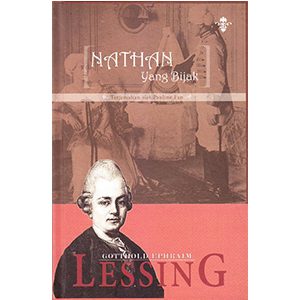 Nathan Yang Bijak


Life Magazine and the Power of Photography
The first comprehensive consideration of Life magazine’s groundbreaking and influential contribution to the history of photography
From the Great Depression to the Vietnam War, the vast majority of the photographs printed and consumed in the United States appeared on the pages of illustrated magazines. Offering an in-depth look at the photography featured in Life magazine throughout its weekly run from 1936 to 1972, this volume examines how the magazine’s use of images fundamentally shaped the modern idea of photography in the United States. The work of photographers both celebrated and overlooked—including Margaret Bourke-White, Larry Burrows, Henri Cartier-Bresson, Frank Dandridge, Alfred Eisenstaedt, Fritz Goro, Gordon Parks, and W. Eugene Smith—is explored in the context of the creative and editorial structures at Life. Contributions from 25 scholars in a range of fields, from art history to American studies, provide insights into how the photographs published in Life—used to promote a predominately white, middle-class perspective—came to play a role in cultural dialogues in the United States around war, race, technology, art, and national identity.
Drawing on unprecedented access to Life magazine’s picture and paper archives, as well as photographers’ archives, this generously illustrated volume presents previously unpublished materials, such as caption files, contact sheets, and shooting scripts, that shed new light on the collaborative process behind many now-iconic images and photo-essays.
RM297.50
Out of stock
Description
The first comprehensive consideration of Life magazine’s groundbreaking and influential contribution to the history of photography
From the Great Depression to the Vietnam War, the vast majority of the photographs printed and consumed in the United States appeared on the pages of illustrated magazines. Offering an in-depth look at the photography featured in Life magazine throughout its weekly run from 1936 to 1972, this volume examines how the magazine’s use of images fundamentally shaped the modern idea of photography in the United States. The work of photographers both celebrated and overlooked—including Margaret Bourke-White, Larry Burrows, Henri Cartier-Bresson, Frank Dandridge, Alfred Eisenstaedt, Fritz Goro, Gordon Parks, and W. Eugene Smith—is explored in the context of the creative and editorial structures at Life. Contributions from 25 scholars in a range of fields, from art history to American studies, provide insights into how the photographs published in Life—used to promote a predominately white, middle-class perspective—came to play a role in cultural dialogues in the United States around war, race, technology, art, and national identity.
Drawing on unprecedented access to Life magazine’s picture and paper archives, as well as photographers’ archives, this generously illustrated volume presents previously unpublished materials, such as caption files, contact sheets, and shooting scripts, that shed new light on the collaborative process behind many now-iconic images and photo-essays.
Publisher: Yale University Press
Hardback
2020
ISBN: 9780300250886
Related products
-

Edward Steichen (Photofile)
The classic Photofile series brings together the best work of the world's greatest photographers in an attractive format and at a reasonable...RM58.50 -

Josef Koudelka (Photofile)
When he arrived in Paris, Koudelka had already produced two outstanding works of reportage One documented the Prague Spring, while the other, on...RM65.50 -

Dancing The Malaysian
'A first in Malaysia, this book investigates interculturalism from the point of view of a dance practitioner-academician whose interest in pursuing...RM120.00 -

History Of Film
In this lively and up-to-date analysis of the history of film, David Parkinson traces the evolution of the moving image from the earliest shadow...RM79.00