
 The Chulia in Penang: Patronage and Place-Making around the Kapitan Kling Mosque, 1786–1957
 House of Glass
 The Farming of Bones
 Sun Yat Sen In Penang
 Pembentukan Jiwa
 Changing My Mind: Occasional Essays
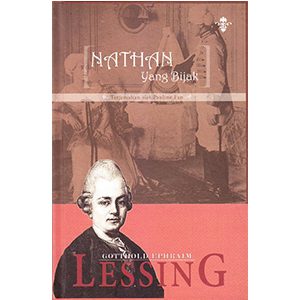 Nathan Yang Bijak
 Ask For No Bullshit, Get Some More!
 Bridging Human Rights Principles And Business Realities In Northeast Asia
 Less than One: Selected Essays
 This Earth of Mankind
 Footsteps
 Revisiting Malaysia Modernisation: Essays On Science, Technology, Religion And Environment
 The Calcutta Chromosome
 60 Tahun Ekonomi Pasaran Sosial
 Last Friends
 Migration, Health And Inequality
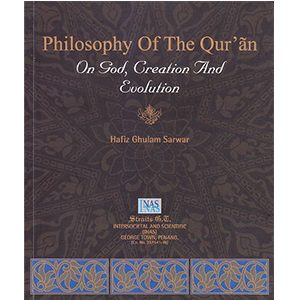 Philosophy Of The Qur'an: On God, Creation And Revolution
 Pemanasan Global & Perubahan Iklim
 Child of All Nations
 Under The Wide And Starry Sky
 Sea Of Poppies


Visual Cultures of the Ethnic Chinese in Indonesia
Visual Cultures of the Ethnic Chinese in Indonesia explores how visual representations shaped and were shaped by how the ethnic Chinese confronted the period of economic dislocation and radical social change during Dutch colonialism and the nationalist struggles in the decolonized Indonesia (including the post-1965 and 1998 social environments). How did the ethnic Chinese communities (re)present themselves to both their domestic and outside world under the changing regimes of representation? How did they visualize, symbolically, their place in Indonesian society? How did the visual shape the ambiguities of the Chinese, the perception of the economic identity, and the forgetting of their involvement in politics, cultures and histories of the nation? More broadly, how did the visual address the interconnectedness of domestic life, the urban cultural milieu, and ideologies of the state and the ruling class?
The book is a response to two paradoxical socio-political phenomena whose convergence is shaping the experience and conceptualization of ethnic Chinese in Indonesia. On the one hand, the economic, technological and cultural forces of colonialism and globalization have created conditions for the formation of ethnic Chinese capital(ists), while on the other, the state generated identity and identification constituted the discourses of othering the ethnic Chinese as foreign minority.
RM179.90
Out of stock
Description
Visual Cultures of the Ethnic Chinese in Indonesia explores how visual representations shaped and were shaped by how the ethnic Chinese confronted the period of economic dislocation and radical social change during Dutch colonialism and the nationalist struggles in the decolonized Indonesia (including the post-1965 and 1998 social environments). How did the ethnic Chinese communities (re)present themselves to both their domestic and outside world under the changing regimes of representation? How did they visualize, symbolically, their place in Indonesian society? How did the visual shape the ambiguities of the Chinese, the perception of the economic identity, and the forgetting of their involvement in politics, cultures and histories of the nation? More broadly, how did the visual address the interconnectedness of domestic life, the urban cultural milieu, and ideologies of the state and the ruling class?
The book is a response to two paradoxical socio-political phenomena whose convergence is shaping the experience and conceptualization of ethnic Chinese in Indonesia. On the one hand, the economic, technological and cultural forces of colonialism and globalization have created conditions for the formation of ethnic Chinese capital(ists), while on the other, the state generated identity and identification constituted the discourses of othering the ethnic Chinese as foreign minority.
Publisher: Rowman & Littlefield International
Paperback
2016
ISBN: 9781783487578
Related products
-

Contemporary Islamic Discourse in the Malay–Indonesian World: Critical Perspectives
While many books have probed the role of Islam in political and social change in Southeast Asia over the past three decades, few have focused on the...RM50.00 -

Aruna & Lidahnya
Aruna Rai, 35 tahun, belum menikah Pekerjaan: Epidemiologist (Ahli Wabah), Spesialisasi: Flu Unggas Obsesi: Makanan Bono, 30 tahun, terlalu sibuk...RM35.00 -

Batak Sculpture
The art of the Batak tribes of the mountains of northern Sumatra has been admired by collectors and scholars since the 19th century However, only a...RM300.00 -

Bound
Does free will truly exist Does man truly exist Okky Madasari explores the seminal questions of mankind and humanity in her latest novel A...RM42.00