
 The Love Department
 The Undesirables: Inside Nauru
 Andre Kertesz: Postcards from Paris
 Dancing The Malaysian
 Anak Malaysia: Pengembaraan Seorang Jurugambar
 Annie Leibovitz: Portraits 2005 - 2016
 Another Way of Telling: A Possible Theory of Photography
 Zona: A Book About a Film About a Journey to a Room
 An Uncommon Hero: M.K. Rajakumar In Politics & Medicine
 The Translator Gives It Visible Form: Translating Malay and Indonesian Literature
 The Chulia in Penang: Patronage and Place-Making around the Kapitan Kling Mosque, 1786–1957
 Penang: The Fourth Presidency of India 1805–1830, Vol. 2: Fire, Spice and Edifice
 Black Milk: On Motherhood and Writing
 Portraits of Penang: Little India
 Vanishing Beauty: Asian Jewelry and Ritual Objects from the Barbara and David Kipper Collection
 XS Green: Big Ideas, Small Buildings
 Watch Us Dance
 Child of All Nations
 Children of the Stone: The Power of Music in a Hard Land
 This Earth of Mankind
 Footsteps


Penang And Its Region: The Story Of An Asian Entreport
From its beginnings in the late eighteenth century, the vibrant colonial port of Penang attracted a diverse range of peoples, enabled pioneering commercial enterprises, and fomented inter-ethnic collaboration and inter-cultural borrowings. The island came to be known as the “Pearl of the Orient”, and for many travellers it was their first port of call in Southeast Asia. In the early nineteenth century, Singapore displaced Penang in international trade, but the island remained a major focus of regional trade. For this reason, the story of Penang’s relations with the Malay Peninsula and other parts of Southeast Asia reveal a great deal about conditions within the region.
This collection discusses the personal networks that have linked prominent individuals in Penang with neighbouring areas, and then considers the position of the island as a whole within the Southeast Asian region. Specifically, the authors write about local entrepreneurs, mutual help associations, and cross border trading and political networks, and aspects of how the cosmopolitan population of the island negotiated the transition from British colony to Malaysian state.
RM45.00
Out of stock
Description
From its beginnings in the late eighteenth century, the vibrant colonial port of Penang attracted a diverse range of peoples, enabled pioneering commercial enterprises, and fomented inter-ethnic collaboration and inter-cultural borrowings. The island came to be known as the “Pearl of the Orient”, and for many travellers it was their first port of call in Southeast Asia. In the early nineteenth century, Singapore displaced Penang in international trade, but the island remained a major focus of regional trade. For this reason, the story of Penang’s relations with the Malay Peninsula and other parts of Southeast Asia reveal a great deal about conditions within the region.
This collection discusses the personal networks that have linked prominent individuals in Penang with neighbouring areas, and then considers the position of the island as a whole within the Southeast Asian region. Specifically, the authors write about local entrepreneurs, mutual help associations, and cross border trading and political networks, and aspects of how the cosmopolitan population of the island negotiated the transition from British colony to Malaysian state.
Publisher: NUS Press
Paperback
2009
ISBN: 9789971694234
Related products
-

Lee Joo For Retrospective
Lee Joo For was born in Penang and studied in St Xavier’s Institution in Penang In 1948, he was appointed art teacher in his alma mater He was...RM120.00 -

Love in Penang
Penang, with its mix of old world charm and modern bustle, has captured the hearts of many — making it the ideal place for a little bit of romance...RM19.90 -
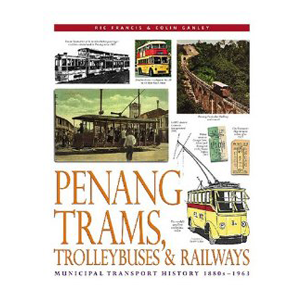
Penang Trams, Trolleybuses and Railways
Which city once had the smallest service trolley-bus in the world Where can you find the first funicular railway in Southeast Asia How do you...RM50.00 -

Malaysian Cooking: A Master Cook Reveals Her Best Recipes
Cook spicy and fragrant dishes with this innovative and easy-to-follow Malaysian Cookbook Carol Selva Rajah, a well respected authority and...RM47.00