
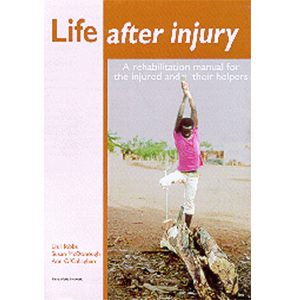
 Life After Injury: A Rehabilitation Manual For The injured And Their Helpers
 CultureShock! Borneo: A Survival Guide To Customs And Etiquette
 Biopiracy Watch: A Compilation Of Some Recent Cases (2013)
 House of Glass
 Dancing The Malaysian
 Blogging And Democratization In Malaysia: A New Civil Society In The Making
 Inspector Singh Investigates: A Calamitous Chinese Killing
 This Earth of Mankind
 Banana Punk Rawk Trails: A Euro-Fool’s Metal Punk Journeys in Malaysia, Borneo and Indonesia
 Portraits: John Berger on Artists
 Coming Of Age: A Decade Of Essays, 2001-2011
 Pemanasan Global & Perubahan Iklim
 Dancing on Thin Ice
 Penang: The Fourth Presidency of India 1805–1830, Vol. 1: Ships, Men and Mansions
 The Chulia in Penang: Patronage and Place-Making around the Kapitan Kling Mosque, 1786–1957
 Infrastruktur: Naratif Seni Rupa Malaysia Jilid 3
 Sea Of Poppies
 Where There Are No Pharmacists: A Guide To Managing Medicines For All Health Workers
 Senyumlah 3
 Ask For No Bullshit, Get Some More!


Afghanistan: A Cultural and Political History
Afghanistan traces the historic struggles and the changing nature of political authority in this volatile region of the world, from the Mughal Empire in the sixteenth century to the Taliban resurgence today. Thomas Barfield introduces readers to the bewildering diversity of tribal and ethnic groups in Afghanistan, explaining what unites them as Afghans despite the regional, cultural, and political differences that divide them. He shows how governing these peoples was relatively easy when power was concentrated in a small dynastic elite, but how this delicate political order broke down in the nineteenth and twentieth centuries when Afghanistan’s rulers mobilized rural militias to expel first the British and later the Soviets. Armed insurgency proved remarkably successful against the foreign occupiers, but it also undermined the Afghan government’s authority and rendered the country ever more difficult to govern as time passed. Barfield vividly describes how Afghanistan’s armed factions plunged the country into a civil war, giving rise to clerical rule by the Taliban and Afghanistan’s isolation from the world. He examines why the American invasion in the wake of September 11 toppled the Taliban so quickly, and how this easy victory lulled the United States into falsely believing that a viable state could be built just as easily.
Afghanistan is essential reading for anyone who wants to understand how a land conquered and ruled by foreign dynasties for more than a thousand years became the “graveyard of empires” for the British and Soviets, and what the United States must do to avoid a similar fate.
RM55.00
Out of stock
Description
Afghanistan traces the historic struggles and the changing nature of political authority in this volatile region of the world, from the Mughal Empire in the sixteenth century to the Taliban resurgence today. Thomas Barfield introduces readers to the bewildering diversity of tribal and ethnic groups in Afghanistan, explaining what unites them as Afghans despite the regional, cultural, and political differences that divide them. He shows how governing these peoples was relatively easy when power was concentrated in a small dynastic elite, but how this delicate political order broke down in the nineteenth and twentieth centuries when Afghanistan’s rulers mobilized rural militias to expel first the British and later the Soviets. Armed insurgency proved remarkably successful against the foreign occupiers, but it also undermined the Afghan government’s authority and rendered the country ever more difficult to govern as time passed. Barfield vividly describes how Afghanistan’s armed factions plunged the country into a civil war, giving rise to clerical rule by the Taliban and Afghanistan’s isolation from the world. He examines why the American invasion in the wake of September 11 toppled the Taliban so quickly, and how this easy victory lulled the United States into falsely believing that a viable state could be built just as easily.
Afghanistan is essential reading for anyone who wants to understand how a land conquered and ruled by foreign dynasties for more than a thousand years became the “graveyard of empires” for the British and Soviets, and what the United States must do to avoid a similar fate.
Publisher: Princeton University Press
Paperback
2012
ISBN: 9780691154411
Related products
-

Taking Aim At The Arms Trade: NGOs, Global Civil Society And The World Military Order
Taking Aim at The Arms Trade: NGOs, Global Civil Society and the World Military Order takes a critical look at the ways in which NGOs portray the...RM100.00 -

Ahli Politik
Ahli Politik mempunyai bahasanya yang tersendiri Juga cerita dan kehidupannya yang tersendiri Sentiasa apa yang ada dalam dirinya tidak sama dengan...RM30.00 -

Creating Criminals: Prisons And People In A Market Society
Vivien Stern explains the forces dictating the shape and direction of crime patterns and criminal justice responses globally, arguing that many...RM45.00 -

Environment & Citizenship: Intergrating Justice, Responsibility And Civic Engagement
Stock exchange implosions, flights of capital, currency collapses, investment scams, tax evasion, and now terrorists hiding their funds in offshore...RM90.00