
 This Earth of Mankind
 Penang: The Fourth Presidency of India 1805–1830, Vol. 1: Ships, Men and Mansions
 Bring Up The Bodies
 Legacy
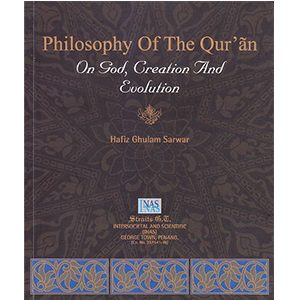 Philosophy Of The Qur'an: On God, Creation And Revolution
 House of Glass
 Infrastruktur: Naratif Seni Rupa Malaysia Jilid 3
 Hope Not Hype: The Future Of Agriculture Guided By The International Assessment Of Agriculture Knowledge, Science And Technology For Development
 Child of All Nations
 Changing My Mind: Occasional Essays
 Malaysia's Original People: Past, Present and Future of the Orang Asli
 Inspector Singh Investigates: A Calamitous Chinese Killing
 Ask For No Bullshit, Get Some More!


Words in Motion: Language and Discourse in Post-New Order Indonesia
Political changes since the fall of the Suharto regime in 1998 have had a significant impact on linguistic and discursive practices in Indonesia. The language policy of the state has become less restrictive than in the past, when Indonesian (Bahasa Indonesia) was vigorously promoted as one of the symbols of the unity of the country’s diverse ethnic groups. Monolingualism in public space has given way to more fluid and pluralistic language use, and regional autonomy legislation enacted in 1999 has encouraged expressions of regional identities and aspirations, opening up a space for the promotion and use of regional languages in the media, education and the bureaucracy.
Concurrently, technological development, in particular widespread access to the internet, has exposed Indonesian society much more directly than before to global flows of information, giving rise to changes stemming in part from sources outside Indonesia, but interpreted and shaped according to local conditions and socio-cultural practices. The meeting of these two vectors, one generated internally and the other coming from exposure to global trends, is producing a situation of diversity, fluidity and change in language use and discursive practice in contemporary Indonesian society. While contributors to this volume discuss Indonesian-language expression at the national level, a particular focus of the collection is on regional, local and minority languages, where problems associated with decentralization find their counterpart in the role that language plays in the workings of regional and national identity politics.
RM95.00
Out of stock
Description
Political changes since the fall of the Suharto regime in 1998 have had a significant impact on linguistic and discursive practices in Indonesia. The language policy of the state has become less restrictive than in the past, when Indonesian (Bahasa Indonesia) was vigorously promoted as one of the symbols of the unity of the country’s diverse ethnic groups. Monolingualism in public space has given way to more fluid and pluralistic language use, and regional autonomy legislation enacted in 1999 has encouraged expressions of regional identities and aspirations, opening up a space for the promotion and use of regional languages in the media, education and the bureaucracy.
Concurrently, technological development, in particular widespread access to the internet, has exposed Indonesian society much more directly than before to global flows of information, giving rise to changes stemming in part from sources outside Indonesia, but interpreted and shaped according to local conditions and socio-cultural practices. The meeting of these two vectors, one generated internally and the other coming from exposure to global trends, is producing a situation of diversity, fluidity and change in language use and discursive practice in contemporary Indonesian society. While contributors to this volume discuss Indonesian-language expression at the national level, a particular focus of the collection is on regional, local and minority languages, where problems associated with decentralization find their counterpart in the role that language plays in the workings of regional and national identity politics.
Publisher: NUS Press
Paperback
2012
ISBN: 9789971696337
Related products
-

Banana Punk Rawk Trails: A Euro-Fool’s Metal Punk Journeys in Malaysia, Borneo and Indonesia
Between 2010 and 2015, travel writer, author and metal punk guitarist Marco Ferrarese was the one and only ‘white elephant in the room’ of the...RM48.00 -

The Oil Palm Complex: Smallholders, Agribusiness and the State in Indonesia and Malaysia
The oil palm industry has transformed rural livelihoods and landscapes across wide swathes of Indonesia and Malaysia, generating wealth along with...RM85.00 -

Exile: Conversations with Pramoedya Ananta Toer
In these remarkable interviews with Andre Vltchek and Rossie Indira, edited by Nagesh Rao, Indonesia’s most celebrated writer speaks out against...RM78.90 -

Batak Sculpture
The art of the Batak tribes of the mountains of northern Sumatra has been admired by collectors and scholars since the 19th century However, only a...RM300.00